Of 10 children in her age group, she was the only survivor; the other 9 children could not make it within less than a year during the medical treatment process for childhood cancer. She had also undergone all medical procedures from surgery, chemo, to radiation. Her cancer continued to regrow and spread.
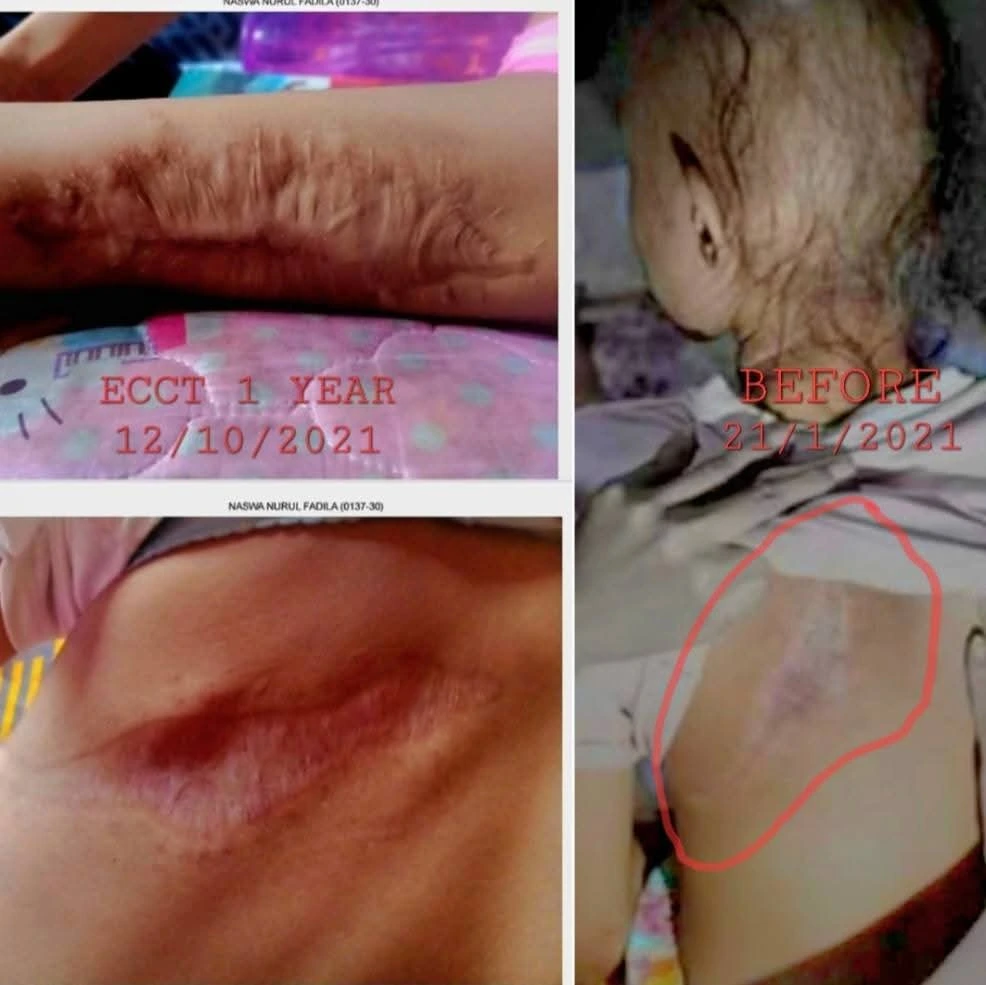
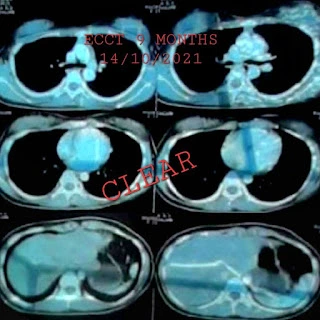
In mid-2020, during the Covid-19 pandemic, Nazwa, who was just 11 years old, was diagnosed with malignant cancer in her back muscle, a type of rhabdomyosarcoma. She then underwent surgery followed by chemotherapy and radiation.
Her cancer continued to spread around the surgical site, and within just 2 months, it had spread to her thigh muscle. It was considered a late stage. She then also underwent surgery on her thigh, followed by subsequent chemotherapy and radiation.
However, when cancer has spread to other places, it means cancer cells have entered the bloodstream. Chasing them is like chasing salt dissolved in water; chemotherapy and radiation will not be enough to clear them, so they will almost always reappear at some point.
Her peers, one by one, succumbed to the disease. Nazwa’s own condition also became weaker due to the effects of chemotherapy and radiation she had to undergo repeatedly. It was unthinkable that she would end up with the same fate as her peers.
In such a condition, Nazwa’s school teacher tried to find another alternative to use the ECCT device. However, her family’s economic situation was quite difficult regarding the cost of the device; her father only worked as a construction laborer moonlighting as a village transport driver. Fortunately, there was a community of social activists in Lampung who wanted to help raise funds for Nazwa.
She started using the device in early 2021 after completing all medical procedures. The device she used was in the form of a blanket and head covering that covered her entire body to prevent spread through the blood. Her condition gradually recovered after using the device; the surgical site and its surroundings became cleaner, and there was no further appearance of cancer elsewhere. She was declared cancer-free by her doctor in less than a year after using ECCT, based on MRI results. Her doctor felt deeply moved every time he saw her because she was his only surviving patient.
The use of ECCT post-medical procedures can help achieve remission and relatively rapid recovery because it only involves clearing the remaining cancer mass. Spread is relatively not an issue with ECCT therapy. Small-scale spread, whether through blood vessels or lymphatic pathways, presents relatively no obstacle for ECCT to kill cancer cells, and the body’s immune system also faces no obstacle in clearing small dead cells, even if they spread.
The combination of medical procedures to remove as much tumor mass as possible with surgery, followed by radiation or chemotherapy to quickly kill residual cells, and then applying ECCT to clear any remaining malignant cells and provide long-term protection to prevent recurrence and spread, is likely an effective method, according to Dr. Akira Takeuchi, MD, Luke Clinic, Tokyo.
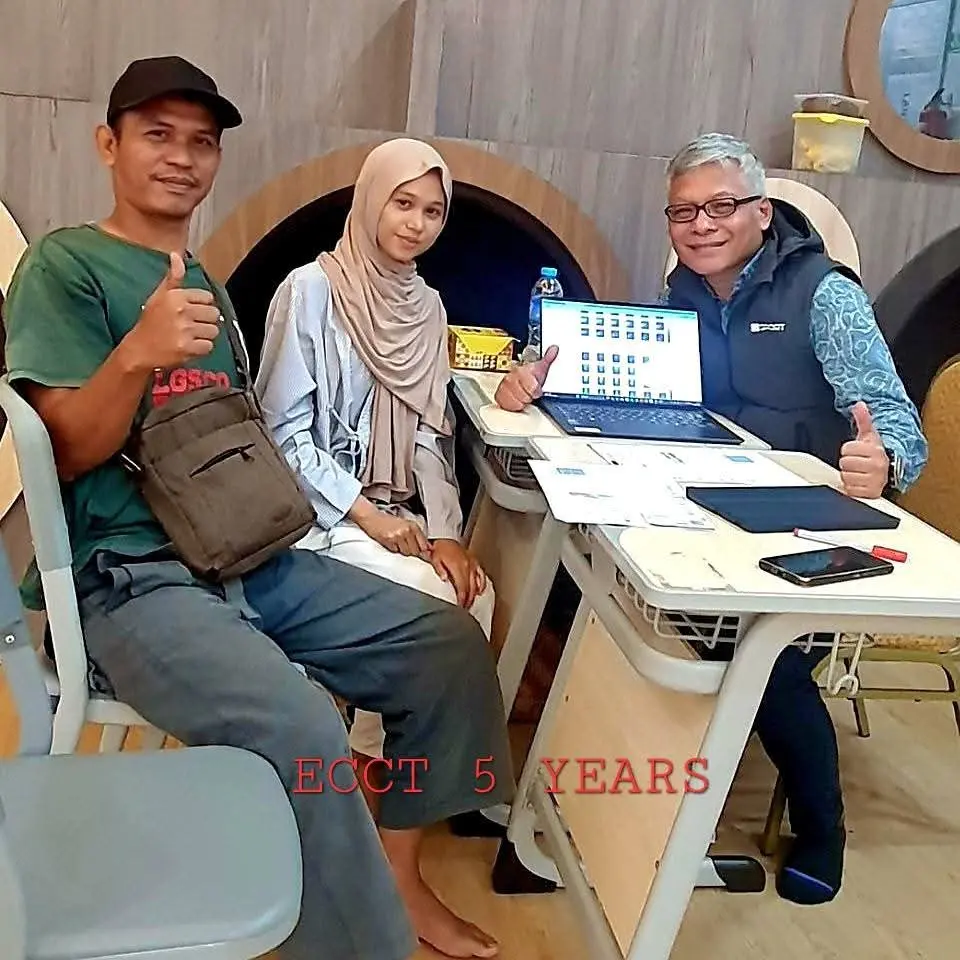
Passing 5 years in 2025, Nazwa’s condition is very healthy and normal. Her activities are normal, busy with high school. Because of the difficult experience she went through in fighting cancer until she could return to normal, she aspires to go to college and become a doctor so she can help children suffering from cancer like her, she said.
May Nazwa remain healthy, be able to get a scholarship, and succeed in achieving her dreams.